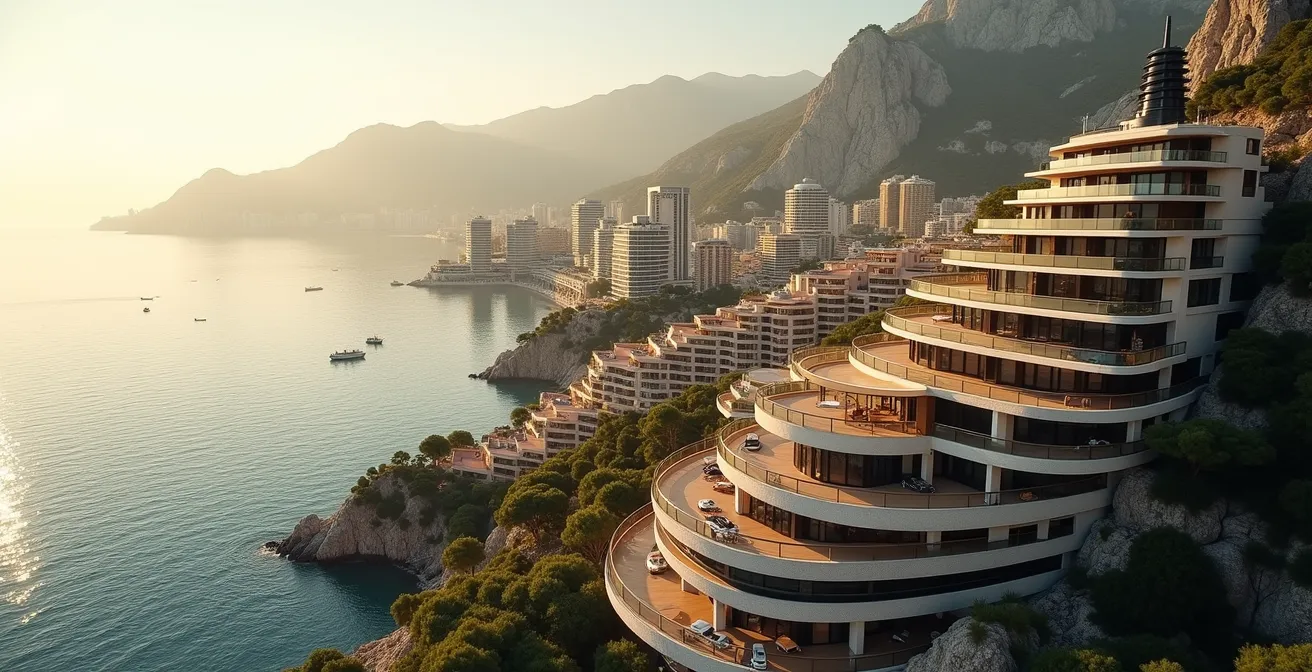
Monaco’s rental market operates under fundamentally different rules than virtually any other property market in the world. The Principality’s unique combination of extreme scarcity, international demand, and complex residency dynamics creates an ecosystem where conventional apartment-hunting strategies fail spectacularly. Most prospective tenants approach the search with assumptions imported from Paris, London, or New York, only to discover too late that Monaco requires an entirely different playbook.
The consequences of missteps extend far beyond missing out on a desirable property. Strategic errors can lock you out of the hidden market where premium opportunities circulate, disqualify you from consideration before you even submit an application, or saddle you with unforeseen legal and financial obligations that derail your Monaco ambitions. When searching for a Monaco studio for rent, understanding these structural realities before you begin is the difference between securing your ideal residence and wasting months in frustration.
This guide reveals seven critical mistakes that distinguish unsuccessful studio searches from strategic ones. From structural market misunderstandings to tactical execution pitfalls, each error represents a dimension of Monaco’s rental ecosystem that remains invisible to newcomers but costs dearly in lost time and opportunities. These aren’t generic warnings about reading contracts or checking appliances. They’re insights into Monaco’s unique dynamics that even experienced international renters consistently overlook.
Monaco Studio Search Essentials
- Monaco’s premium properties circulate through invitation-only networks before public listing
- Landlords select tenants competitively based on financial profile and discretion
- Lease duration directly impacts residency certificate eligibility with tax implications
- Neighborhood choice determines daily lifestyle constraints beyond proximity and prestige
- Total occupancy cost typically exceeds advertised rent by 40-60% when factoring hidden expenses
Misjudging Monaco’s Invisible Market Dynamics
The most fundamental error prospective tenants make is treating Monaco’s rental market as if it operates transparently through public listings. In reality, the Principality’s studio market functions on two entirely separate tiers. The visible market consists of properties advertised on portals and agency websites—typically representing overflow inventory, less desirable units, or properties that failed to secure tenants through preferred channels. The invisible market comprises premium studios that circulate exclusively among pre-qualified candidates through agency networks, word-of-mouth, and direct landlord relationships.
This bifurcation exists because Monaco landlords face zero vacancy pressure in a market where demand perpetually exceeds supply. With monthly rents reaching €114.50 per square meter in 2024, property owners can afford to be extraordinarily selective. Rather than publicly advertising and managing inquiries from dozens of unqualified candidates, established agencies maintain waiting lists of pre-vetted tenants whom they contact directly when suitable properties become available.
Market Acceleration Following Mareterra Development
The launch of Monaco’s Mareterra land extension project has intensified competition across all rental segments. Leading agencies report dramatic price acceleration, with Valeri agency documenting rental increases of 15-20% over the past year, while Petrini Exclusive Real Estate observed average increases between 8% and 15% in the first eight months alone. In the prime segment, Savills confirms that monthly rents in the Principality rose by 6% in 2024, reinforcing Monaco’s position as the world’s most expensive residential rental location. This rapid appreciation has pushed even more premium inventory into exclusive off-market channels.
Accessing the invisible market requires understanding Monaco’s agency landscape. Three to four agencies dominate the premium studio segment, controlling the majority of desirable properties through long-standing landlord relationships. These agencies operate as gatekeepers, granting access to their best inventory only to candidates who demonstrate financial credibility, professional stability, and cultural fit during initial consultations.

The strategy for penetrating these networks begins with relationship-building rather than property-browsing. Schedule in-person meetings with the top agencies well before your desired move-in date. Arrive prepared with complete financial documentation, clear articulation of your Monaco objectives, and professional presentation. These initial consultations serve as informal pre-qualification assessments. Agencies that perceive you as a serious, qualified candidate will proactively contact you when suitable properties emerge, often days before public listing.
Monaco’s rental market also follows pronounced seasonal cycles that most newcomers miss entirely. The highest-quality inventory turnover occurs during three distinct windows: early September following summer departures, late November after the Formula One Grand Prix concludes, and January aligned with fiscal year transitions. Properties listed during these periods reflect genuine vacancies rather than struggling-to-rent units. Conversely, searching during the Grand Prix season or high summer typically yields only the least desirable remaining inventory at inflated prices.
| City | Premium vs Monaco (%) | Key Factor |
|---|---|---|
| New York | -12% | Lower demand |
| London | -146% | Larger inventory |
| Hong Kong | -52% | Market cooling |
| Geneva | -232% | More options |
The multi-channel approach is essential precisely because relying solely on online portals guarantees access only to secondary stock. Combine digital monitoring of major platforms with direct agency relationships, networking within Monaco’s professional communities, and even discreet inquiries through building concierges in desirable locations. The best studios are secured through relationships and timing, not through browsing listings.
Overlooking Your Candidacy Positioning Strategy
Traditional rental guides position the apartment hunter as an evaluator selecting among available options. Monaco’s reality inverts this dynamic completely. In a market where ten qualified candidates compete for every desirable studio, landlords and agencies function as selectors rather than marketers. Your challenge isn’t finding a suitable property—it’s positioning yourself as the most attractive candidate when that property appears.
Monaco landlords prioritize three attributes above all others: financial solidity, behavioral discretion, and commitment stability. Financial solidity means demonstrating not just ability to pay monthly rent, but substantial reserves that signal you won’t create payment issues even if circumstances change. Behavioral discretion reflects Monaco’s culture where landlords value quiet, respectful tenants who maintain properties impeccably and avoid conflicts with neighbors in buildings where residents often include high-net-worth individuals seeking privacy. Commitment stability indicates genuine intention to remain long-term rather than viewing the studio as a brief experiment.
Preparing a Monaco-ready application dossier before beginning your search provides decisive competitive advantage. This comprehensive package should include recent bank statements showing liquid assets exceeding six months’ rent, employment contracts or business ownership documentation proving income stability, professional references from previous landlords or employers, and a concise cover letter explaining your Monaco objectives and lifestyle compatibility.
Monaco-Ready Application Essentials
- Define clear budget including all charges and lifestyle costs before viewing properties
- Prepare complete financial documentation and have it immediately accessible
- Secure bank references demonstrating deposits of €500,000 or more to signal financial stability
- Obtain employment contracts or business ownership proof showing income sustainability
- Create professional tenant profile with previous landlord references and character recommendations
- Be prepared to commit within 24-48 hours of viewing the property you want
The initial impression you create with agencies determines which properties they’ll show you and how aggressively they’ll advocate for your candidacy with landlords. Approach agency meetings as professional interviews rather than casual inquiries. Dress appropriately, communicate clearly and respectfully, demonstrate knowledge of Monaco’s rental norms, and express realistic expectations. Agencies remember candidates who waste their time with unrealistic requirements or unprofessional behavior, effectively blacklisting them from future opportunities.
When multiple candidates pursue the same studio—the norm rather than exception for premium properties—differentiation becomes critical. Beyond having documentation ready faster than competitors, consider strategies like offering to sign a longer initial lease term, proposing a bank guarantee exceeding the standard deposit, demonstrating flexibility on move-in timing to accommodate the landlord’s schedule, or including a brief personal letter that respectfully conveys your appreciation for the property and commitment to excellent tenancy.
Understanding these competitive dynamics early in your search can help you develop the strategic mindset required for Monaco’s market. For those new to international real estate dynamics, reviewing broader real estate tips for beginners can provide useful foundational knowledge that applies to tenant positioning as well as investment.
Underestimating Legal and Residency Implications
Most prospective tenants treat the studio lease as a simple rental contract similar to agreements in their home countries. In Monaco, a residential lease carries implications far beyond occupancy rights—it serves as the foundational document for residency applications, triggers specific tax obligations, and creates legal constraints unique to Monégasque jurisdiction. Misunderstanding these dimensions before signing can derail residency objectives, create unexpected tax liabilities, or lock you into inflexible arrangements.
The critical connection most overlook is between lease duration and residency certificate eligibility. Monaco authorities require proof of stable, long-term accommodation as a prerequisite for issuing the residence card. While specific requirements vary based on nationality and residency category, one-year leases often prove insufficient to demonstrate the commitment authorities expect. Many applicants discover too late that their short-term lease requires renewal and renegotiation precisely when they need uninterrupted proof of residence for official applications, potentially delaying their entire residency process by months.

Monaco rental contracts contain specific clauses rarely found in other jurisdictions that carry significant practical consequences. Strict subletting prohibitions mean you cannot temporarily lease your studio to others during extended absences without explicit landlord permission—violations can result in immediate lease termination. Domiciliation requirements often mandate that the rented address serves as your official registered residence, creating obligations to maintain minimum physical presence that may conflict with international travel schedules. Some leases specify minimum occupancy periods or require advance notification of absences exceeding certain durations.
The distinction between furnished and unfurnished leases carries implications beyond inventory. Furnished rentals (the majority in the studio segment) typically involve shorter standard lease terms and less tenant protection under Monégasque law. Unfurnished properties generally offer longer initial terms and slightly stronger tenant rights, but remain rare in the studio market. Your choice affects not just immediate living arrangements but legal positioning for residency applications and future renewal negotiations.
For international tenants, the intersection of rental agreements with tax obligations requires particular attention. Establishing Monaco residency through your lease may trigger tax reporting requirements in your country of origin, particularly regarding the timing of residency termination elsewhere. The fiscal implications of Monaco residency extend well beyond the Principality’s favorable tax environment—many jurisdictions scrutinize claimed Monaco residency carefully. Those navigating these complexities benefit from early research into understanding French property taxes and related cross-border considerations that often affect Monaco residents with ties to neighboring France.
Monaco’s tenant legal recourse mechanisms differ substantially from jurisdictions with stronger renter protections. Dispute resolution processes favor negotiated settlement over litigation, and practical remedies for tenant grievances remain limited compared to markets like France or the UK. This reality makes pre-signature negotiation and thorough contract review absolutely critical—issues that would be contestable post-signature elsewhere may be effectively irreversible in Monaco. Engage a Monaco-specialized attorney to review any lease before signing, focusing particularly on termination clauses, renewal terms, charge calculation methods, and maintenance responsibility allocations.
Ignoring Location-Specific Lifestyle Constraints
Conventional wisdom suggests that in a city-state measuring barely two square kilometers, location matters less than in sprawling metropolises. This assumption proves catastrophically wrong. Monaco’s extreme vertical topography, hyper-localized infrastructure distribution, and pronounced neighborhood social codes create lifestyle variations between districts that rival differences between entirely separate cities. Choosing a studio based primarily on price or aesthetics without deeply understanding location-specific daily realities leads to profound lifestyle mismatches.
Monaco’s defining geographical characteristic is its vertical architecture carved into steep Mediterranean hillsides. Distance measured in meters provides almost no useful information about actual accessibility or mobility effort. A studio in Fontvieille may be 600 meters from Monte-Carlo Casino by straight-line measurement, but the journey requires navigating 100 vertical meters of elevation change via public elevators, outdoor escalators, and steep pedestrian paths. During summer heat or winter rain, these vertical distances become significant daily friction.
Understanding the public elevator and escalator network that stitches Monaco’s vertical neighborhoods together is essential. These systems function as de facto public transportation, and your daily quality of life depends heavily on their location relative to your studio. Properties adjacent to major vertical connections enjoy practical accessibility advantages worth far more than their modest rent premiums. Conversely, studios requiring long walks before reaching elevator access feel isolated despite being centrally located on a map. Visit your shortlisted properties multiple times, deliberately navigating from the building to destinations you’ll frequent regularly—supermarkets, metro stations, your workplace—to experience the actual daily journey rather than theoretical distance.
Infrastructure and service distribution across Monaco’s neighborhoods reflects historical development patterns rather than rational planning. Despite the Principality’s compact size, certain residential zones require systematic travel to access everyday amenities. The Exotic Garden area offers spectacular views and relative tranquility but provides limited walkable access to supermarkets, pharmacies, or restaurants—residents depend on vehicular transport or lengthy walks for routine errands. Conversely, Condamine district places virtually all daily necessities within immediate pedestrian reach but offers less prestigious addresses and smaller, older studio inventory.
Each Monaco neighborhood carries implicit social codes regarding appearance, behavior, and lifestyle expectations that influence daily comfort for residents. Monte-Carlo and its immediate surroundings maintain elevated standards for public presentation—residents routinely dress formally even for casual activities, and the ambient atmosphere skews toward international luxury culture. Fontvieille attracts younger professionals and families, supporting a more relaxed though still affluent atmosphere. La Rousse and Saint-Roman neighborhoods blend residential calm with accessibility, appealing to long-term residents seeking lower-key Monaco living. Choosing a neighborhood whose dominant culture aligns with your personal style dramatically impacts social comfort and community integration.
Location also significantly affects professional and social opportunity access within Monaco’s tight-knit community. Certain neighborhoods naturally facilitate informal encounters at local cafés, building lobbies, or community spaces where Monaco’s networking culture thrives. Others offer privacy and seclusion but reduce serendipitous connection opportunities. For those moving to Monaco specifically for business development or career advancement, proximity to the social nodes where your industry congregates—particular restaurants, clubs, or residential buildings—carries strategic value beyond mere convenience.
Key Takeaways
- Monaco’s premium studio inventory circulates through exclusive agency networks before public listing; accessing it requires relationship-building and strategic timing
- Successful candidates position themselves competitively with comprehensive documentation, financial credibility demonstration, and professional presentation that signals desirable tenant characteristics
- Lease agreements in Monaco carry residency and tax implications that extend far beyond occupancy rights; duration, type, and specific clauses require careful evaluation
- Neighborhood selection must account for Monaco’s vertical topography, localized infrastructure, and distinct social codes that create dramatic lifestyle variations across short distances
- Total occupancy costs including variable charges, lifestyle expenses, and opportunity costs of location typically exceed advertised rent by significant margins requiring comprehensive budgeting
Rushing the Total Cost Reality Check
The advertised monthly rent for a Monaco studio represents only the baseline of actual occupancy costs. Tenants who budget solely around the quoted rent figure inevitably encounter financial strain within months as the full ecosystem of direct charges, lifestyle-mandated expenses, and location-driven opportunity costs becomes apparent. Monaco’s cost structure reflects its unique status as an ultra-luxury jurisdiction where maintaining residence imposes minimum spending thresholds regardless of personal preferences.
Rental charges in Monaco deserve particular scrutiny as they vary dramatically between buildings and frequently exceed initial estimates. Older buildings often calculate charges based on actual consumption and maintenance costs that fluctuate seasonally—summer air conditioning and winter heating can swing monthly charges by 50-150% compared to mild-season baselines. Newer luxury developments typically impose fixed charges that include extensive building amenities, concierge services, and common area maintenance, but these fixed amounts often substantially exceed the charges advertised for comparable older buildings.

Beyond formal charges, Monaco residency imposes structural lifestyle expenses that prove largely incompressible. Parking costs represent the most significant surprise for car owners—monthly parking spots in secure buildings command €300-600 depending on location and building quality, while street parking remains functionally impossible for daily use. Many studios, particularly in older buildings, feature compact kitchens that realistically support only basic meal preparation, pushing residents toward regular restaurant dining where even casual meals typically cost €25-40 per person. The ambient service culture means activities that would be self-service elsewhere—dry cleaning, alterations, routine repairs—default to professional services at premium prices.
Location choice creates profound cost-of-opportunity variations that manifest in transportation expenses, time costs, and professional networking effectiveness. Studios in peripheral areas might offer €200-300 monthly rent savings compared to central Monaco, but residents often find themselves requiring vehicle ownership (purchase, insurance, parking, fuel) for convenient daily mobility—easily adding €800-1,200 to effective monthly costs. Conversely, premium locations near Monaco’s business and social centers enable pedestrian mobility, support spontaneous professional networking, and reduce time spent on routine logistics—opportunity gains with substantial though less visible economic value.
The strategic approach to evaluating Monaco studio costs involves calculating a true equivalent monthly cost that incorporates all financial dimensions. Start with advertised rent, add average monthly charges (requesting 12-month charge histories from current tenants or agencies), factor location-specific transportation costs (parking if car ownership, or taxi/car service frequency if relying on alternatives), estimate realistic monthly dining and service expenses based on Monaco’s price levels, and assign a monetary value to time costs associated with the property’s location relative to your frequent destinations. This comprehensive figure—often 40-60% above base rent—provides realistic comparison between seemingly disparate properties.
Many tenants also underestimate the financial implications of Monaco’s deposit and advance payment norms. Standard practice requires three months’ rent as security deposit plus first and last months’ rent paid at lease signing—five months’ total rent upfront. For a €3,000 monthly studio, this means €15,000 due at signing before occupancy begins. Combined with moving costs, furniture purchases for unfurnished units, and the financial cushion required for residency applications, the capital requirement for establishing Monaco residence often reaches €30,000-50,000 beyond annual rent budgets. Prospective tenants must ensure sufficient liquid capital before committing to the search rather than discovering inadequate resources after finding their ideal studio.
Frequently Asked Questions About Monaco Rentals
How long does it typically take to secure a studio rental in Monaco?
The timeline varies dramatically based on your preparation level and market approach. Well-prepared candidates with established agency relationships and complete documentation can secure properties within 2-4 weeks when premium inventory becomes available during peak seasons. However, those relying solely on public listings or lacking pre-qualified status often search for 3-6 months before finding suitable options. The most efficient approach involves beginning agency relationship-building 2-3 months before your target move-in date, allowing time to position yourself as a preferred candidate before actively searching.
What minimum income or assets do Monaco landlords typically require for studio rentals?
While no official universal standard exists, most Monaco landlords and agencies expect monthly income of at least three to four times the monthly rent, or demonstrable liquid assets exceeding 18-24 months of rent. For a €3,000 monthly studio, this translates to €9,000-12,000 monthly income or €54,000-72,000 in accessible savings. Premium properties or risk-averse landlords may require even higher ratios. International applicants without Monaco employment often need to demonstrate substantially higher asset reserves since income verification proves more complex across jurisdictions.
Can I rent a Monaco studio without committing to full residency?
Yes, many Monaco studio tenants maintain residency elsewhere and use their Monaco property as a secondary residence. However, this approach carries several implications. Landlords generally prefer tenants intending primary residence and may view secondary-residence candidates less favorably during competitive selection. Additionally, rental costs remain identical regardless of occupancy frequency, making Monaco an expensive secondary option. Some lease agreements include minimum presence requirements or advance notification obligations for extended absences. If your objective involves eventual Monaco residency, establishing your rental as primary residence from inception simplifies future administrative processes significantly.
What happens if I need to terminate my Monaco lease before the contracted end date?
Early termination procedures in Monaco depend entirely on specific lease terms, as standardized tenant protections common in other jurisdictions don’t apply uniformly. Most leases include notice period requirements ranging from one to three months, during which you remain financially responsible for rent regardless of vacancy. Some contracts specify early termination penalties equivalent to remaining rent through the lease term, while others allow termination with sufficient advance notice. Negotiating favorable termination clauses before signing proves essential, as modifying terms mid-lease rarely succeeds. Monaco’s tight rental market means landlords face minimal re-letting challenges, reducing their willingness to accommodate early departures flexibly.